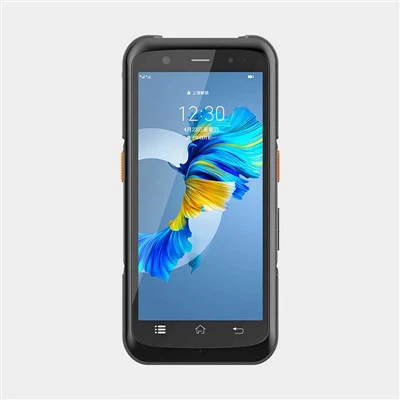
In the dynamic and fast - paced world of logistics operations, the role of Personal Digital Assistants (PDAs) has become increasingly significant. As a PDA in logistics supplier, I often get asked whether PDAs can be connected to other devices in logistics operations. The answer is a resounding yes, and in this blog, I will explore the various aspects of PDA connectivity in the logistics industry.
Connectivity Technologies for PDAs in Logistics
PDAs are equipped with a range of connectivity technologies that enable them to communicate with other devices. One of the most common technologies is Bluetooth. Bluetooth allows PDAs to connect wirelessly with a variety of devices such as barcode scanners, printers, and weighing scales. For example, a warehouse worker can use a PDA Barcode Scanner connected via Bluetooth to scan items and then send the data directly to the PDA. This seamless connection streamlines the inventory management process, reducing the chances of human error and increasing efficiency.
Wi - Fi is another crucial connectivity option for PDAs in logistics. With Wi - Fi, PDAs can connect to the local network, enabling real - time data transfer to the central database. This is particularly useful in large warehouses or distribution centers where workers need to access up - to - date inventory information. For instance, if a worker is picking items for an order, the PDA can communicate with the inventory management system via Wi - Fi, ensuring that the correct items are selected and the inventory levels are updated immediately.
Some PDAs also support cellular connectivity. This is beneficial for logistics operations that involve transportation, such as delivery drivers. A driver can use a Rugged PDA with cellular connectivity to access the delivery route, scan packages at each stop, and update the delivery status in real - time. This allows the logistics company to provide accurate tracking information to customers and manage the delivery process more effectively.


Connecting PDAs to Barcode Scanners
Barcode scanners are an integral part of logistics operations, and connecting them to PDAs is a common practice. As mentioned earlier, Bluetooth is a popular method for this connection. A Handheld Scanner Android can be paired with a PDA running on the Android operating system. Once paired, the scanner can send the scanned barcode data directly to the PDA.
The advantage of this connection is that it eliminates the need for manual data entry. Workers can quickly scan items, and the PDA can process the data and perform tasks such as inventory updates or order fulfillment. Moreover, modern barcode scanners are highly accurate and can read a wide range of barcode types, making them suitable for various logistics applications.
Connecting PDAs to Printers
In logistics, there is often a need to print labels for packages, shipping documents, or inventory tags. PDAs can be connected to printers to facilitate this process. Bluetooth or Wi - Fi can be used to establish the connection between the PDA and the printer.
When a worker needs to print a label, they can generate the label information on the PDA and then send it to the connected printer. This ensures that the labels are printed accurately and in a timely manner. For large - scale logistics operations, high - speed printers can be used in conjunction with PDAs to handle a large volume of printing tasks.
Connecting PDAs to Weighing Scales
Weighing scales are used in logistics to determine the weight of packages, which is important for shipping cost calculations and inventory management. PDAs can be connected to weighing scales to automate the weight data collection process.
Once connected, the weighing scale can send the weight data directly to the PDA. The PDA can then use this data in combination with other information, such as the barcode data, to calculate the shipping cost, update the inventory records, and ensure that the packages meet the weight requirements. This integration of weighing scales and PDAs improves the accuracy and efficiency of the logistics process.
Benefits of Connecting PDAs to Other Devices in Logistics
The ability to connect PDAs to other devices in logistics operations offers several benefits. Firstly, it increases efficiency. By automating data collection and transfer, workers can perform tasks more quickly and accurately. For example, instead of manually entering barcode data and weight information, the PDA can receive this data directly from the connected devices, saving time and reducing the risk of errors.
Secondly, it improves data accuracy. Manual data entry is prone to errors, such as typos or incorrect readings. Connecting PDAs to other devices ensures that the data is transferred accurately, leading to more reliable inventory management and order processing.
Thirdly, it enhances real - time visibility. With the ability to connect to the central database via Wi - Fi or cellular networks, PDAs can provide real - time information about inventory levels, order statuses, and delivery progress. This allows logistics managers to make informed decisions and respond quickly to any issues that arise.
Challenges and Considerations
While the connectivity of PDAs to other devices in logistics operations offers many advantages, there are also some challenges and considerations. One of the main challenges is compatibility. Different devices may use different communication protocols, and ensuring that the PDA can connect and communicate effectively with other devices can be a complex task. It is important to choose PDAs and other devices that are known to be compatible and to test the connections thoroughly before implementing them in a live logistics environment.
Another consideration is security. With the increased connectivity comes an increased risk of security breaches. PDAs may store sensitive information such as customer data, inventory details, and order information. It is essential to implement robust security measures, such as encryption and access controls, to protect this data from unauthorized access.
Conclusion and Call to Action
In conclusion, PDAs can indeed be connected to other devices in logistics operations, and this connectivity offers significant benefits in terms of efficiency, data accuracy, and real - time visibility. As a PDA in logistics supplier, I am committed to providing high - quality PDAs and solutions that enable seamless connectivity with other devices.
If you are in the logistics industry and are looking to enhance your operations with PDA connectivity, I invite you to reach out for a procurement discussion. We can help you choose the right PDAs and devices for your specific needs, and ensure that they are integrated smoothly into your logistics processes.
References
- "Logistics Technology Trends: The Role of PDAs", Logistics Management Journal, 2022
- "Connectivity Solutions for Mobile Devices in Supply Chain Management", Supply Chain Review, 2021
- "Best Practices for PDA Integration in Logistics", International Journal of Logistics Operations and Management, 2020